


Why Reducing Plastic Isn’t Always the Full Solution ?
Plastic has become one of the most visible symbols of environmental pollution. Images of plastic waste accumulating in oceans, growing concerns about microplastics, and the industry’s dependence on fossil-based feedstocks have understandably intensified calls to reduce plastic consumption.
Reducing unnecessary plastic is an important environmental objective. But an equally important question is often overlooked: Does removing plastic from a product or package necessarily reduce its overall environmental impact?
Consider a food manufacturer replacing a lightweight polymer film with an alternative packaging material. If the new package requires more energy to manufacture, increases transportation weight, or fails to protect the food as effectively, the environmental benefits of the substitution become less certain.
This is particularly relevant to food packaging, where the environmental performance of the package cannot be separated from the product it protects.
A sustainable packaging strategy must therefore address more than the amount of plastic consumed. It should consider material efficiency, product protection, resource use, greenhouse gas emissions, recyclability, and actual end-of-life conditions.
The fundamental question is not simply how to eliminate plastic, but how to minimize the environmental consequences of delivering, protecting, and consuming a product.
1. Less Plastic Does Not Automatically Mean Lower Environmental Impact
Environmental comparisons frequently focus on visible characteristics: whether a package contains plastic, how much it weighs, or whether it carries a recyclable label.
These indicators provide useful information, but none is sufficient on its own. A more comprehensive assessment requires life cycle thinking.
Life Cycle Assessment (LCA) evaluates environmental impacts across defined stages of a product’s life, potentially including raw material extraction, manufacturing, transportation, use, and end-of-life treatment.
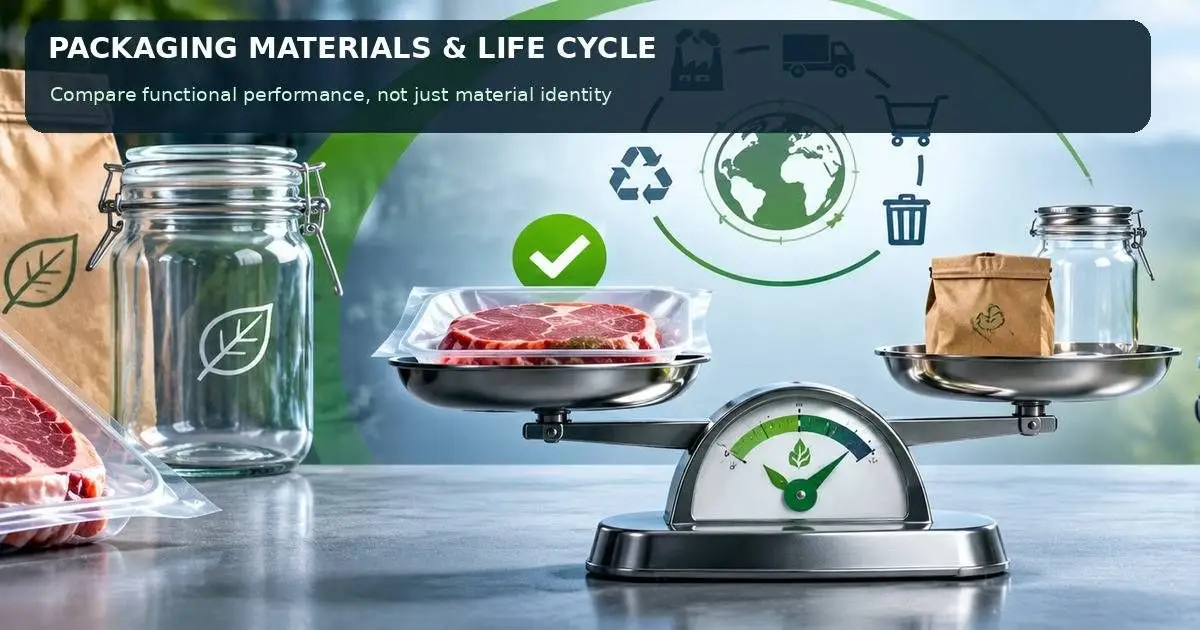
For packaging comparisons, the functional unit is especially important. Comparing one kilogram of plastic with one kilogram of glass may reveal differences between the materials, but it does not necessarily represent their performance as packaging systems.
A more meaningful comparison might examine the environmental impacts of packaging, transporting, and delivering one kilogram of food in acceptable condition. This approach accounts for the possibility that different materials require different amounts of packaging to deliver the same function.
It also allows the packaging’s impact on product protection to be included in the assessment. The United Nations Environment Programme (UNEP) has emphasized that environmental decisions concerning single-use products should consider their complete life cycles rather than relying exclusively on material substitution [1].
Nevertheless, LCA has limitations. Some assessments do not adequately capture environmental litter, microplastic leakage, long-term chemical exposure, or biodiversity effects. Consequently, a package with lower greenhouse gas emissions cannot automatically be described as environmentally superior in every respect.
2. The Substitution Paradox: When Alternatives Create Different Environmental Burdens
Paper, glass, metals, and bio-based materials can offer valuable environmental and functional advantages. However, replacing plastic with these materials does not necessarily eliminate environmental impacts. Instead, some burdens may shift from one environmental category to another.
Glass, for example, is chemically stable and can support effective reuse and recycling systems. However, its weight and the energy required for production can influence its climate footprint, particularly where transportation distances are substantial.
Paper-based materials can originate from renewable resources, but their production still requires water, energy, and feedstocks. Some packaging applications also require additional barriers against moisture, oxygen, or grease, potentially complicating the finished material’s recyclability.
A 2024 study published in Environmental Science & Technology provides a useful illustration of these trade-offs. The researchers evaluated greenhouse gas emissions associated with plastics and alternatives in 16 applications across packaging, construction, automotive products, textiles, and consumer durables.
In 15 of the 16 applications, the plastic products demonstrated lower greenhouse gas emissions under the assessed scenarios. The reported differences ranged from 10% to 90% in the relevant comparisons [3].
These findings are significant, but their interpretation requires care. The study primarily addressed greenhouse gas emissions, not all dimensions of environmental sustainability. It therefore does not establish that plastics are universally preferable to paper, glass, metal, or other materials.
The appropriate conclusion is that environmental performance depends on the application, the required function, the selected alternatives, and the assumptions used in the assessment. Replacing one material with another should be treated as an engineering decision supported by evidence, not as an automatic environmental improvement.
3. Why Packaging Weight Matters, but Performance Matters More
One of the practical advantages of flexible polymer packaging is its ability to deliver useful performance with relatively little material.
Thin films can provide mechanical protection, heat-sealing functionality, controlled permeability, and compatibility with automated packaging processes. Because the mass of packaging influences material consumption and transportation loads, lightweight structures can offer advantages compared with heavier alternatives.
However, reducing packaging weight has limits. A thinner film is not necessarily a more sustainable film.
If downgauging reduces puncture resistance, tear resistance, or seal reliability below the requirements of an application, packaging failures may increase.
Consider vacuum packaging for a product with sharp edges or exposed bones. A film with insufficient puncture resistance may develop leaks during handling or transportation. Even a small increase in failure rates can undermine the environmental benefit gained from reducing polymer consumption.
Similarly, a film that performs poorly on a packaging machine may increase scrap generation, rejected packages, or production interruptions.
Material efficiency must therefore be evaluated together with functional performance. This means considering not only the initial film thickness but also the properties of the complete structure, its processability, and its ability to maintain package integrity throughout the supply chain.
4. The Carbon Footprint of Plastics Is Significant
An evidence-based discussion of sustainability should not minimize the climate impacts of plastic production.
According to the OECD’s Global Plastics Outlook, the global plastics life cycle generated approximately 1.8 gigatonnes of carbon dioxide equivalent in 2019, representing around 3.4% of worldwide greenhouse gas emissions. Approximately 90% of those emissions were associated with the production and conversion of plastics from fossil fuels [2].
A separate 2024 analysis by Karali, Khanna, and Shah estimated emissions associated with primary plastic production in 2019 at approximately 2.24 gigatonnes of carbon dioxide equivalent. The researchers reported this as 5.3% of global emissions, using a comparison that excluded emissions associated with agriculture and land use, land-use change, and forestry [4].
The two estimates are based on different system boundaries and denominators and should not be interpreted as directly interchangeable.
What they establish is that plastics have a substantial climate footprint, and that improving material efficiency, decarbonizing production, and reducing demand for unnecessary virgin materials remain important priorities.
Yet a package’s environmental contribution is not limited to the emissions generated during manufacturing. In some applications, its protective performance can influence the environmental impacts of the much larger product system. Food packaging offers one of the clearest examples.
5. Food Waste Prevention: An Important Environmental Function of Packaging
Food production consumes substantial resources. Agricultural land, irrigation water, energy, fertilizers, transportation, refrigeration, and processing operations all contribute to the environmental footprint of food.
When food is discarded before consumption, the resources associated with producing and distributing it have also been used without delivering their intended nutritional benefit.
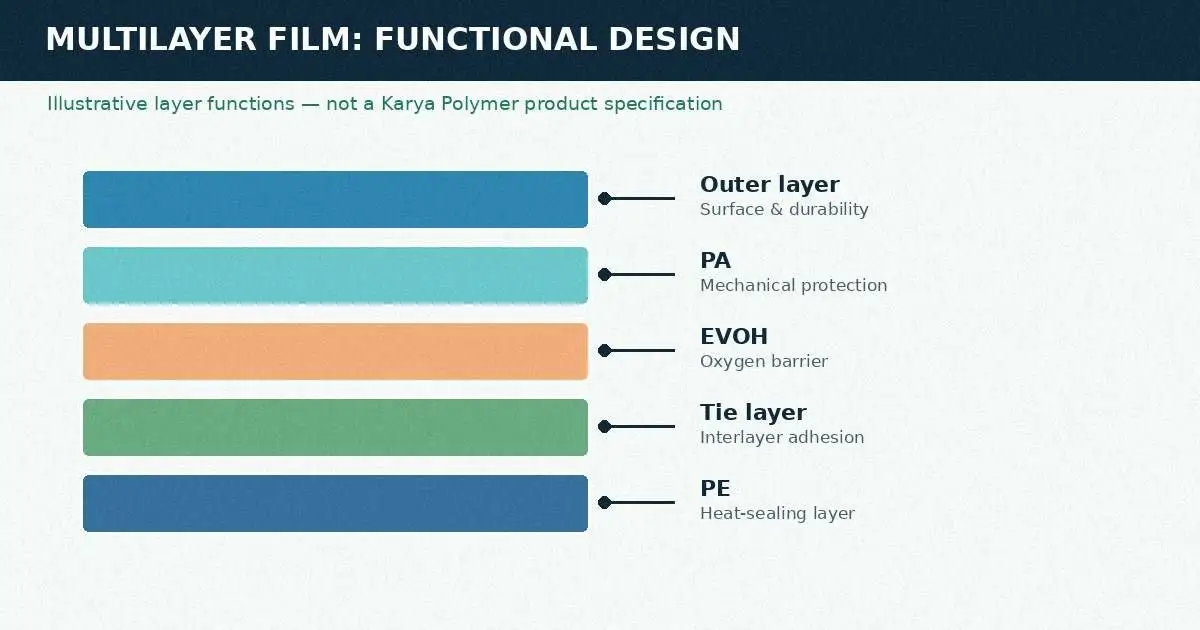
According to UNEP, food loss and waste collectively account for an estimated 8–10% of global greenhouse gas emissions [6]. This gives packaging a potentially important role in reducing environmental impacts.
A correctly designed food package can help preserve quality, protect against external contamination, reduce mechanical damage, and control exposure to oxygen and moisture.
These functions can be particularly important for perishable products such as meat, seafood, dairy products, and fresh produce. However, preservation performance depends on the product and the packaging system.
A high oxygen-barrier structure can be valuable for foods susceptible to oxidative deterioration, while fresh fruits and vegetables may require controlled gas exchange rather than the lowest possible oxygen permeability.
Vacuum packaging can reduce oxygen availability, but it does not eliminate all food-safety risks. Proper refrigeration, hygiene, and validated storage conditions remain essential.
Research also indicates that minimizing packaging impacts without considering food losses can produce misleading environmental conclusions.
Williams and Wikström examined the relationship between packaging and food losses across five food products. Their findings indicated that improved packaging protection can reduce overall environmental impacts even where the packaging itself has a greater environmental burden [5].
The implication is important for packaging design. The objective should not be to minimize packaging material at any cost. It should be to minimize total system impacts while ensuring that food reaches consumers safely and in acceptable condition.
6. Food Waste, Landfills, and Methane Emissions
Food waste can also contribute to climate change after disposal. When organic waste decomposes under anaerobic conditions, such as those present in certain landfill environments, methane may be produced.
Methane is a particularly powerful greenhouse gas. According to values reported in the IPCC Sixth Assessment Report, methane has a global warming potential of approximately 80 times that of carbon dioxide or more over a 20-year period, depending on the emission category and accounting assumptions.
This makes food waste prevention an important climate strategy. However, it would be inaccurate to assume that all discarded food enters landfills, or that all methane generated during decomposition reaches the atmosphere.
Waste treatment methods, landfill gas capture, and local operating conditions influence actual emissions.
These distinctions matter because the environmental benefits of packaging should be assessed through real or defensible estimates of prevented food loss, rather than an assumption that every preserved product automatically avoids a fixed amount of methane.
Packaging has the potential to contribute to climate mitigation, but that contribution must be demonstrated in the context of the specific food system.
7. Multilayer Polymer Films: Engineering Performance Through Material Selection
Flexible multilayer films illustrate why packaging performance cannot be judged solely by material quantity.
Different polymers provide different combinations of mechanical, thermal, optical, sealing, and barrier properties.
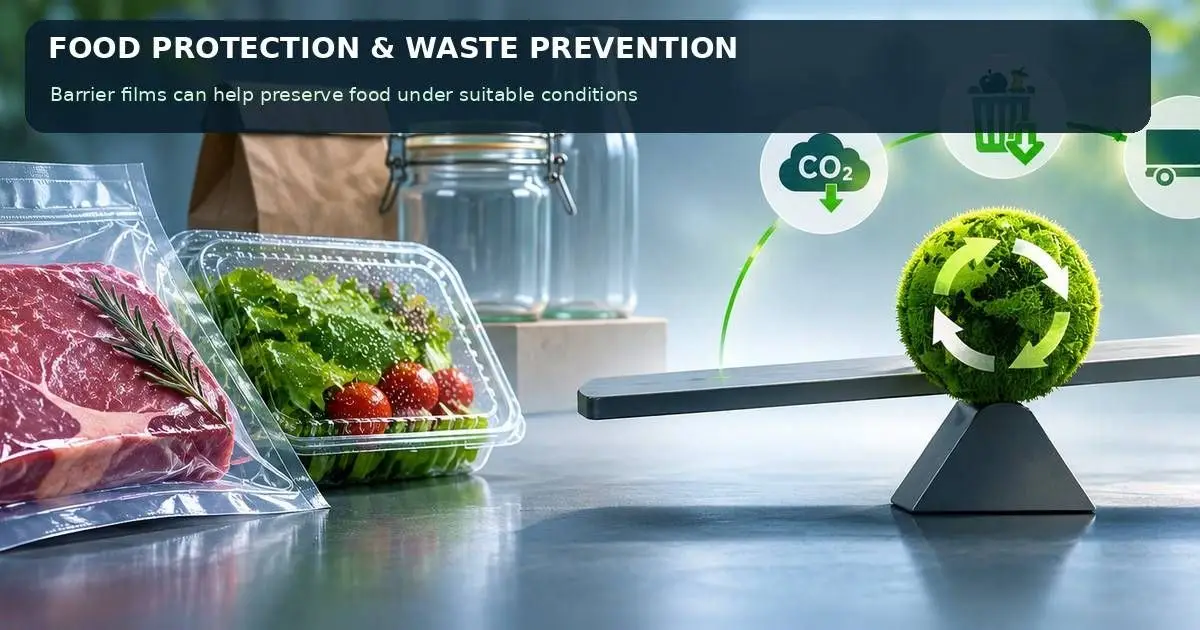
Polyethylene (PE), for instance, is commonly used in sealing layers and can provide useful moisture-barrier performance. Polyamide (PA) can contribute mechanical strength and resistance to puncture and abrasion.
Ethylene vinyl alcohol (EVOH) is widely used as an oxygen-barrier material, while polyethylene terephthalate (PET) can provide dimensional stability and useful mechanical or thermal properties in suitable structures.
Combining polymers within a multilayer structure allows manufacturers to tailor film properties to the needs of a particular application. However, final performance depends on the specific grades, layer thicknesses, adhesive or tie layers, processing conditions, and overall structural design.
EVOH is a particularly useful example. It offers strong oxygen-barrier performance under suitable conditions, but its barrier properties are affected by humidity. For this reason, EVOH is frequently incorporated into multilayer structures where other polymers help protect the barrier layer and provide additional functional properties.
This engineering approach is relevant to packaging sustainability because material selection can influence both the amount of polymer required and the package’s ability to protect its contents.
At the same time, combining dissimilar polymers can create recycling difficulties. Multilayer packaging therefore demonstrates a central sustainability challenge: optimizing product protection while considering material efficiency and end-of-life compatibility.
8. Practical Implications for Vacuum Skin, Thermoforming, and Fresh Produce Packaging
The balance between material consumption and packaging performance becomes particularly important in demanding industrial applications.
Vacuum Skin Packaging
In vacuum skin packaging (VSP), a film conforms closely to the product and the supporting surface. Film selection must account for formability, product geometry, seal integrity, mechanical durability, and barrier requirements.
For oxygen-sensitive products, effective packaging can support quality retention when combined with appropriate processing, refrigeration, and storage conditions. However, neither high barrier performance nor vacuum conditions alone guarantee food safety.
A sustainable VSP solution must provide adequate protection while avoiding unnecessary material consumption and packaging failures.
Thermoforming Films
Thermoforming introduces additional technical requirements because the film undergoes heating and deformation.
Film behavior during forming, wall-thickness distribution, resistance at corners, and sealing performance affect package reliability.
A film with a low nominal thickness may perform poorly if deformation produces excessively thin or vulnerable regions. Therefore, material selection should be based on the properties of the formed package rather than the original film thickness alone.
Fresh Produce Packaging
Fresh fruits and vegetables remain biologically active after harvesting. They continue to respire, consume oxygen, and release carbon dioxide.
Packaging for these products may need to manage gas exchange and moisture transfer to support appropriate internal conditions.
Unlike certain high-barrier meat packaging applications, minimizing oxygen permeability is not universally beneficial for fresh produce. Excessively low oxygen concentrations or excessive carbon dioxide accumulation can damage product quality.
The correct packaging properties depend on crop physiology, respiration rates, storage temperature, and the intended distribution period.
For all three applications, sustainability requires the packaging structure to be matched to the product’s actual needs.
9. The Recycling Challenge of Multilayer Flexible Packaging
Multilayer polymer structures can deliver important protective functions, but their complexity presents challenges for recycling.
Different polymers are not necessarily compatible during melt processing. When incompatible materials are recycled together, the resulting material may exhibit reduced mechanical performance or other quality limitations.
Furthermore, strong interlayer adhesion and the presence of tie layers can make polymer separation difficult.
A 2025 review of multilayer barrier film recycling identified complex material composition and interlayer adhesion as significant obstacles to recycling these structures [7].
This does not mean that all multilayer packaging is unrecyclable. Instead, recyclability depends on the particular structure, available technology, collection arrangements, contamination levels, and market for recycled material.
Designing packaging around more compatible polymer families can support recycling objectives in some applications. Nevertheless, a mono-material alternative should not automatically be considered environmentally preferable if it fails to provide adequate protection or increases food losses.
Another important distinction is the difference between technical recyclability and actual recycling. A package may be designed for recycling but still end up in landfill or uncontrolled disposal if the necessary collection and processing infrastructure is unavailable.
Real environmental performance depends on what happens after the package is used.
10. Are Bio-Based and Biodegradable Plastics the Answer?
Bio-based and biodegradable polymers are often presented as alternatives to conventional fossil-based plastics. However, the two terms describe different properties.
A bio-based polymer is derived wholly or partly from biological feedstocks. Biodegradability refers to the ability of a material to undergo biological degradation under specified conditions.
A material can be bio-based without being readily biodegradable. Similarly, a compostable material may require industrial composting conditions rather than degrading effectively in soil, seawater, or ordinary landfill environments.
The environmental impacts of bio-based materials also depend on agricultural production, feedstock sourcing, processing energy, land use, and end-of-life management.
Some feedstock systems may introduce additional demands for water, fertilizer, and agricultural land. Consequently, replacing fossil-based polymers with bio-based materials does not automatically guarantee a lower environmental footprint.
The appropriate choice must consider the complete life cycle, including performance in the intended application.
11. Moving Beyond Reduction Toward a Circular Packaging Economy
Reducing unnecessary plastic remains essential, but it is only one component of a comprehensive sustainability strategy.
The broader challenge is the linear pattern of material production and consumption, in which resources are extracted, converted into products, used, and then discarded.
According to the OECD, only approximately 9% of global plastic waste was ultimately recycled in 2019 [2]. This low recycling rate reflects challenges involving collection, sorting, processing economics, contamination, and demand for secondary materials.
Addressing these problems requires coordinated action across the value chain.
UNEP’s 2023 report Turning off the Tap proposes a systems-change strategy centered on reducing unnecessary plastic uses, accelerating reuse, improving recycling, and redirecting markets toward appropriate alternatives.
According to the report’s modeled scenario, a coordinated set of interventions could reduce global plastic pollution by approximately 80% by 2040 relative to a business-as-usual pathway [1].
For packaging manufacturers, this approach has several practical implications.
Material consumption should be optimized without compromising essential functionality. Where technically feasible, structures should be designed with realistic recycling pathways in mind. Manufacturing efficiency and waste prevention should be addressed alongside material selection.
Products should be evaluated not only by their initial specifications but also by their performance during packaging, transportation, storage, and final use.
The objective is to preserve the value of materials and products while reducing unnecessary resource consumption.
12. What Does Sustainable Packaging Mean from an Engineering Perspective?
For industrial packaging, sustainability must be translated into measurable design and performance requirements.
The starting point is understanding the product. Does it require protection against oxygen, water vapor, mechanical damage, light, or external contamination?
What temperatures and handling conditions will the package encounter? What sealing performance and mechanical properties are necessary?
Once the functional requirements are established, the packaging structure can be optimized. This may involve reducing unnecessary thickness, choosing an appropriate polymer combination, improving processability, or modifying the packaging design.
However, these modifications should be validated against the risk of product damage, package leakage, production scrap, and food loss.
End-of-life options must also be considered. The most appropriate solution depends on the interaction among material properties, product requirements, operational conditions, local waste-management systems, and environmental priorities.
A technically defensible objective can therefore be expressed as follows: Use the minimum practical amount of material needed to deliver reliable packaging performance, while minimizing environmental impacts across the complete product life cycle.
This is a more meaningful sustainability principle than simply minimizing the amount of plastic present in a package.
Conclusion
Plastic pollution, fossil resource consumption, and the limitations of existing waste-management systems pose serious environmental challenges.
Reducing unnecessary plastic use offers an important way to address these concerns. However, replacing or eliminating plastics without considering their functional role can create unintended consequences.
In food packaging, inadequate protection can increase spoilage and waste valuable resources. During transportation, heavier alternatives may raise energy consumption. Industrial applications also require materials with suitable properties to prevent packaging failures and avoid unnecessary waste.
These trade-offs do not justify continued plastic consumption without improvement. Instead, they highlight the importance of making informed, application-specific decisions.
Sustainable packaging requires a balanced approach that combines material efficiency, reliable performance, responsible design, and practical end-of-life management.
For the polymer packaging industry, this means moving beyond discussions focused solely on material identity. Manufacturers should evaluate packaging solutions through measurable performance criteria and life cycle impacts.
At Karya Polymer, this perspective offers a useful framework for working with manufacturers and industrial customers. The company considers product protection requirements, packaging process conditions, and opportunities to reduce unnecessary material use and product waste when discussing film selection.
Ultimately, the future of sustainable packaging will depend on more than whether a package contains plastic. It will depend on how efficiently manufacturers use materials, how effectively packaging protects products, and what environmental impacts arise throughout the entire system.
References
[1] UNEP (2023). Turning off the Tap: How the World Can End Plastic Pollution and Create a Circular Economy. https://wedocs.unep.org/handle/20.500.11822/42277
[2] OECD (2022). Global Plastics Outlook: Economic Drivers, Environmental Impacts and Policy Options. https://www.oecd.org/en/publications/global-plastics-outlook_de747aef-en.html
[3] Environmental Science & Technology (2024). Replacing Plastics with Alternatives Is Worse for Greenhouse Gas Emissions in Most Cases. https://doi.org/10.1021/acs.est.3c05191
[4] Karali, N., Khanna, N., & Shah, N. (2024). Climate Impact of Primary Plastic Production. https://doi.org/10.2172/2336721
[5] Williams, H., & Wikström, F. (2011). Environmental Impact of Packaging and Food Losses in a Life Cycle Perspective: A Comparative Analysis of Five Food Items. https://doi.org/10.1016/j.jclepro.2010.08.008
[6] UNEP (2024). Food Waste Index Report 2024. https://www.unep.org/resources/global-food-waste-index-report-2024
[7] Macromolecular Materials and Engineering (2025). Recycling of Multilayer Polymeric Barrier Films: An Overview of Recent Pioneering Works and Main Challenges. https://doi.org/10.1002/mame.202400414


Leave a Reply
Want to join the discussion?Feel free to contribute!